
User manual
VITALID Guide: Premium lid & Premium Pack
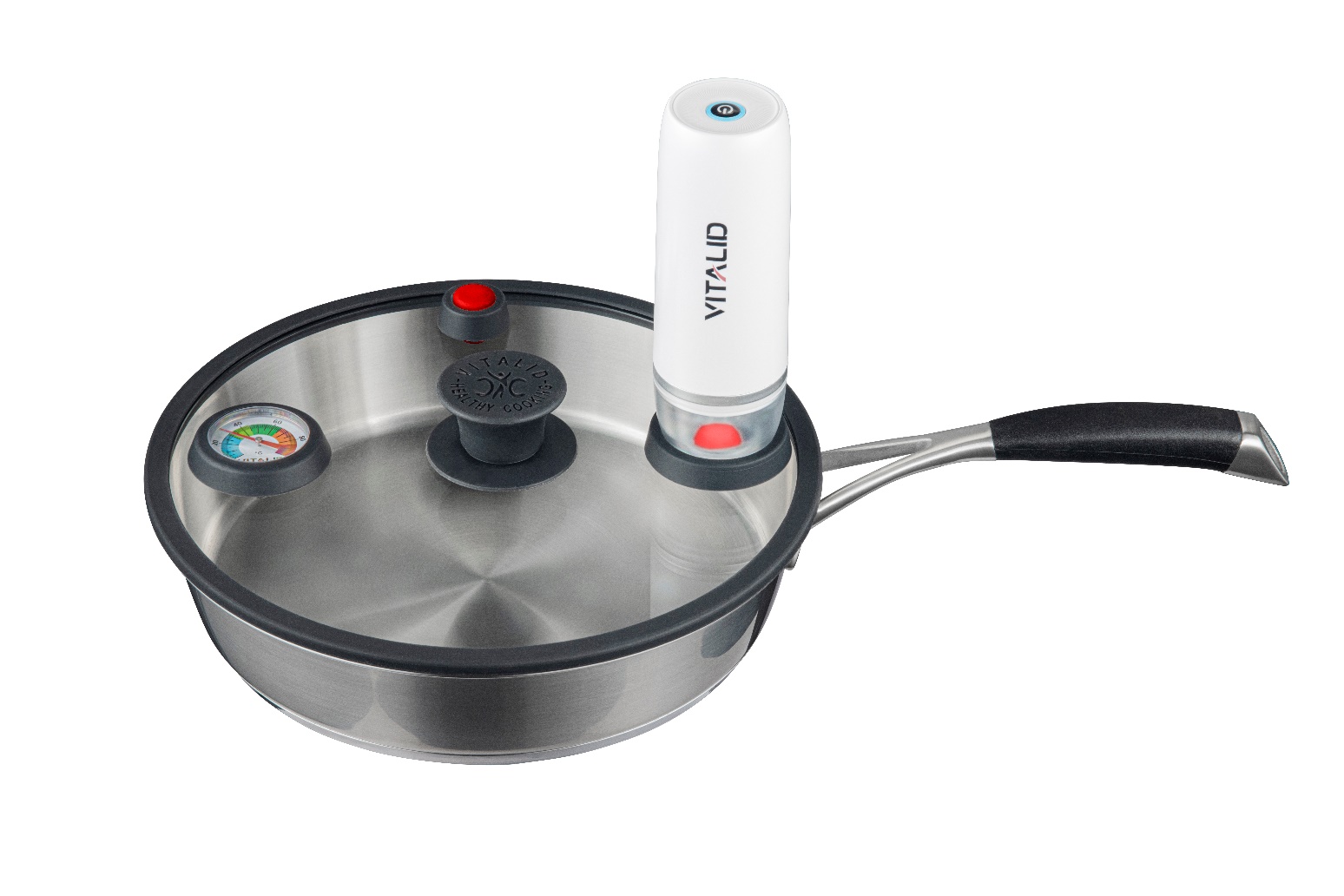
VITALID GUIDE
The Label of Living Food
PREMIUM lid & PREMIUM pack
Introduction
Welcome to the world of healthy cooking with VITALID, the innovative lid that lets you prepare tasty dishes without losing any nutrients. This tool will save you time, improve your well-being and help preserve your health and life expectancy. Congratulations on your purchase!
Safety instructions
Read the instructions for use carefully before any handling. VITALID, the world's first cooking utensil using controlled negative-pressure cooking, is simple to use but requires certain precautions. As always in the kitchen, poor heat management can lead to the risk of burns or fire. VITALID is not recommended for people with reduced physical, sensory or mental capacities.
VITALID: Healthy & Fast Cooking, Health Cooking, Flavour & Vitamin Cooking
- Cooking at temperatures above 60-65°C, even supposedly gentle ones such as steaming, destroys flavours, colours, structures, vitamins, enzymes and antioxidants, while sometimes turning food into harmful molecules, even carcinogenic or degenerative ones.
- It is therefore essential to cook without exceeding 65°C and to do so quickly, because cooking time is also a destructive factor to take into account.
- At high temperature, the longer you cook, the more the food contracts and is impoverished: proteins contract, fibres tighten, nutrients are trapped or destroyed. The food closes up instead of opening up.
With low pressure, the pressure and the cooking temperature inside the pan are reduced. This allows cooking at low temperature, around 60-65°C, while naturally speeding up internal transformations. The fibres open gently, the juices are released, the nutrients are preserved.
Low pressure naturally regulates the transformation of the food. It avoids thermal violence and preserves the essentials. The food cooks without being damaged.
- VITALID is currently the only method in the world that allows cooking below 65°C, very quickly, two factors necessary for preserving vitamins and essential nutrients.
Items supplied as standard with a VITALID lid
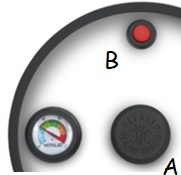
- The tempered glass lid is made up of a peripheral Platinum silicone seal, a pre-set safety valve, a pressure-release flap, a handle and a thermometer holder. A 5 l/min low-pressure pump (A), a USB charging cable (C) and a probe thermostat (B) complete the lid; finally, the VITALID guide (D) will help you perfect your experience.
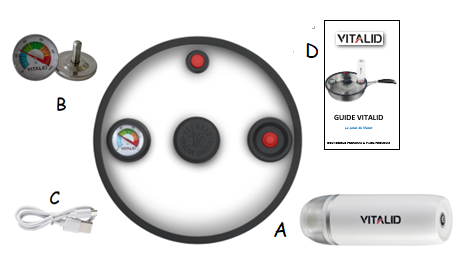
- Before use, check that the equipment is complete.
Types of pans
- The choice of cooking pan is essential. Its upper rim must be perfectly flat (±0.03 mm of unevenness) to guarantee a tight contact with your VITALID and it must be resistant enough to low pressure. Our 316L stainless steel utensils, designed specifically to precise criteria, are ideal for this type of use.
- With a thickness of 0.8 mm in a single layer, our pans are guaranteed for life.
- Our utensils are suitable for all types of heat sources, including induction and barbecue (microwaves excluded).
⚠️ WARNING – Risk of thermal shock
Tempered glass withstands heat but remains sensitive to sudden temperature changes. To avoid any risk of shattering, never place a still-hot lid in a cold or wet sink, or on a cold surface. Also avoid exposing it to a cold draught, especially near an open window. Always let the lid cool down gradually and naturally.
⚠️ Warning: the thermometer cannot exceed 100°C, so it is recommended not to expose your lid beyond this temperature, for example in an oven; this would serve no purpose or interest anyway. This lid is not designed to work above 65°C; it would not be able to keep the low pressure.
- Prefer solid stainless steel pans, 1-layer (never 3-layer, which can deform) with a reinforced aluminium base for optimal efficiency with this cooking mode.
- Make sure the pans are sturdy, without sharp edges, and able to withstand low pressure. We will never guarantee the use of any equipment other than our own, which is obviously the best suited and best performing, such as pans made of aluminium, iron, cast iron, ceramic or glass.
- Also avoid raised handles and pouring spouts that could prevent contact between the lid and the pan.
Getting started
Positioning the lid: Simply place the lid on your pan of the same diameter.
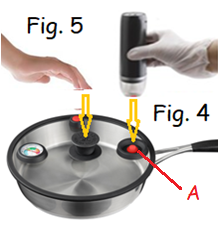
Using the pump, creating the low pressure
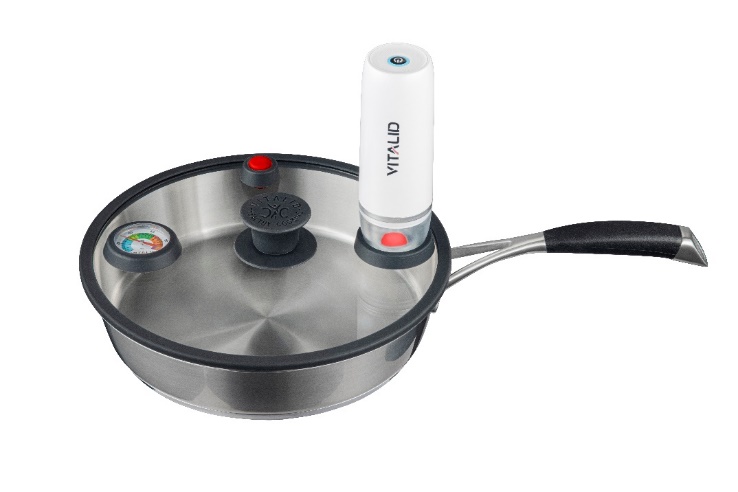
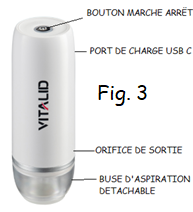
- After correctly placing your lid, insert the pump into the opening of the red valve A, making sure it sits flat (Fig. 4). Switch it on by pressing the on/off button (Fig. 3). The pump will quickly stick to the lid by suction, and the noise it makes will change slightly, indicating that the low pressure has started successfully.
- Sometimes, at start-up, it may be necessary to press lightly on the central handle (Fig. 5) to improve contact between the lid and your utensil and thus make it easier to start the low pressure. Even a single hair can prevent it from starting. Any leak, even a tiny one, can compromise this process. Starting the low pressure depends above all on the quality of the pan and the cleanliness of the whole set.
- It is essential to wait until the pump stops by itself; stopping it manually too early will greatly reduce its efficiency and the results. Then remove the pump from the lid to prevent it from falling. Never repeat the operation twice in a row, as this could damage the pump.
- The pumping time varies with the volume of your pan and how full it is: the more air there is to depressurise, the longer it takes, generally between 30 seconds and 1 minute. Check that the low pressure is properly established by trying to lift the lid, which must stay firmly in place on the pan.
⚠️ Never lift the whole set by the lid handle, which could come off depending on the level of low pressure obtained and the weight of the contents. This is a balance you should avoid testing if you do not want to spill your food on the floor. Always carry the set by the pan's handles.
⚠️ If the low pressure does not engage, this may be due to a lack of flatness of the pan or a lack of cleanliness. In that case, you will need to change the pan or clean it better.
Ideal cooking with VITALID
- Thanks to its low-pressure technology, VITALID lets you cook food quickly at very low temperatures while preserving its vitamins, tenderness, flavours, crunch and all its nutrients. With VITALID, you master the cooking of your meats, fish, vegetables and fruit, while enjoying a healthy and efficient method, and while preserving your health and your immunity.
The 2 basic principles of low-pressure cooking
🔸 Very low cooking temperature: 60°C
- It is important never to exceed 65°C when cooking with VITALID under low pressure, and even 60°C. This ideal temperature was established by chefs, nutritionists and researchers as ideal for preserving the flavours and nutritional properties of food while allowing optimal dissolution of collagen, hence maximum tenderness. At this temperature, food cooks without drying out, without charring or overcooking, and the vitamins and minerals remain intact. By contrast, higher temperatures would produce steam incompatible with maintaining the low pressure and would harden the muscle fibres.
🔸 Dry reverse cooking
- If you want to enjoy all the benefits of VITALID, you must use its cooking method called "dry reverse cooking", very strongly recommended, unprecedented and foolproof. Suitable for all types of food, this natural method is carried out at room temperature, without preheating or adding water, and with or without fat.
- Whether you are a beginner or experienced, reverse cooking will be your most faithful ally in the kitchen. It will spare you many disasters and guarantee perfection every day, without stress, in absolute comfort. It will also save you precious time, because it requires very little intervention, even none, and very little supervision. However, it remains subject to a few basic rules:
a) Cold start: Reverse cooking consists of starting the cooking at room temperature, without any preheating. Simply place your food on the bottom of the cold pan. If you choose to use fat or oil, the food should only be lightly coated with it; this will only make the result better and healthier.
b) Dry cooking: One of the essential characteristics of reverse cooking with VITALID is the total absence of added water throughout the process. Liquids are completely excluded. The natural moisture of the food is enough to guarantee perfect cooking. Adding water would generate steam, which could stop the low pressure. For dishes that need water, such as soups or sauces, it must be added at the end of cooking, which keeps the nutrients and concentrated flavours. The same goes for wines, to be added at the end of cooking. For using wines or spirits, it is advisable to marinate before cooking using your VITALID, which will accentuate and strengthen their absorption thanks to the low-pressure effect, saving you time and intensifying the flavour of the food.
c) With or without fat: Adding fat is optional and is mainly used to improve the flavour of the food. It is a matter of personal taste; a knob of butter on a piece of meat will enhance the taste, without being able to burn at this temperature level. Brushing your food with these fats can bring additional flavours without harming your health. At 65°C, food does not stick to the bottom of the pan, whatever it is. With VITALID, the critical temperatures of fats are never reached, thus guaranteeing perfectly healthy cooking.
d) Quick low pressure: To optimise molecular agitation and reduce cooking time, it is important to create the low pressure as quickly as possible. Make sure the starting temperature is room temperature, but above all stays below 65°C to avoid steam formation. If the low pressure fails, wait for the temperature to drop before trying again.
Special rules for meat, fish and shellfish
- Start by salting and seasoning the meat or fish, then let it rest at room temperature for at least 10-15 minutes; it is a rule in haute cuisine to relax the meat fibres before any cooking.
- Then place the food in your pan, also at room temperature, put your lid on, activate the pump to create the low pressure, then turn the heat source on to the minimum. It is important never to add water; it is even advisable to dry the meat or fish beforehand with absorbent paper, for unmatured meats or washed fish.
- Adding fat is optional, and should preferably be put on the food, in order to reduce the quantities. Cooking begins gently. The rarefied air immediately stops all oxidation, thus preserving vitamins, flavours and proteins even more. Without any intervention, an ultra-gentle but fast cooking is on its way to perfection, allowing you to cook in complete peace. - Low pressure condenses the food, favouring internal heat transfer by conduction, which makes cooking faster, more intense and uniform throughout the thickness. In a confined, airtight environment, cooking in its own juice, your food will always stay perfectly juicy, with no possible drying out.
- Under low pressure and below 65 °C, the tenderness and juiciness of meat and fish are exceptional. The dissolution of collagen into gelatine will be gradual and complete, with no need for basting. This allows, on the one hand, a complete dissolution of the collagen and, on the other, avoids excessive Maillard reactions, which can dry out and harden the outside of the meat while leaving the centre undercooked.
- You can always check the progress of cooking by opening the lid, with the option of putting it back under low pressure if necessary.
Special rules for vegetables
- Green or root vegetables can be lightly mixed with a little oil or other fats before being placed directly in the cold pan, after carefully draining or drying them with a cloth or disposable absorbent paper. They will stay crunchy and well coloured while being perfectly cooked. At the end of cooking, vegetables can also be lightly grilled for a better taste appearance, depending on the variety.
- It is important to note that no vegetable should be grilled before cooking; this must be done only at the end of cooking, in line with the reverse cooking method under low pressure. Adding fat will make this step easier, and it can be done quickly at a higher temperature without VITALID. Only potatoes, perfectly dried, require a temperature above 65°C, without however exceeding 75-80°C.
- Quick active low pressure
- Maximum 65°C
- No added water
- Cold start
- Grilling at the end of cooking
- With or without fat
- Regular check of low pressure and temperature
Cooking techniques and particularities
🔸 Grilling:
- In reverse cooking, the grill phase can be done either at the beginning or at the end of cooking. In both cases, use a clean utensil preheated to 160 °C, with or without fat. The food should be browned quickly on both sides, alternating periods of 15 to 30 seconds, without insisting too much, until the desired appearance is obtained. If you choose to grill before starting the deep reverse cooking, it is essential to observe a resting time of 5 to 10 minutes on a cutting board or a plate. This will let the fibres relax and the temperature of your pan drop to around 30-40 °C. If this cooling time is not respected, creating the low pressure will be difficult, even impossible, and a crust may form around your food, which may also dry out. Temperatures above 65 °C must absolutely be avoided in low-pressure cooking.
- The grill phase at the end of cooking, by far the simplest, most effective and quickest, gives a more subtle crispness, enhances caramelised flavours and controls the Maillard reaction more safely and much more easily, thus avoiding any formation of acrylamide, thick crust or drying out. The skins will be much more pleasant to eat, especially with poultry or fish. Their flavours and tenderness will be clearly superior with grilling at the end of cooking and with the control of this operation, which is much easier to carry out.
✅ Advantages of grilling after cooking:
- Perfect, tender, juicy interior cooking.
- Very low loss of nutrients: proteins intact, collagen well dissolved, vitamins little degraded.
- Maillard reaction limited to the surface, without excessive toxicity.
- Searing after cooking means not attacking the raw food, hence better digestibility.
⚠️ Disadvantages of grilling before cooking:
- If poorly controlled, overly strong searing on raw food hardens the fibres instead of enhancing them.
- Thermal shock can cause early denaturation of the proteins.
- The crust that forms reduces the effectiveness of the gentle internal cooking, acting as a barrier.
- The Maillard reaction is more intense, hence a slightly increased risk of toxic compounds (AGEs).
Additional tips:
- For delicate fish or eggs, grilling is often unnecessary, even not recommended.
- For vegetables, low-pressure cooking alone is enough in most cases. You can grill only to add a visual or crunchy touch.
We strongly advise you to always do the grill phase at the end of cooking, for gastronomic reasons and for ease.
🔸 Grilling well without sticking
- Non-stick cooking with 316 L stainless steel: the natural method using the Leidenfrost effect.
The 316 L stainless steel used in your VITALID system needs no artificial coating. And that is a good thing: its bare, healthy surface becomes naturally non-stick if used intelligently. Here is the simple method so that nothing sticks, without any unnecessary addition:
1. Preheating empty – water drop test: Place your empty pan on medium heat, NEVER FULL BLAST. After 1 to 2 minutes, pour a small drop of water in the centre:
- If it stays still: it is too cold.
- If it sizzles: it is almost right.
- If it forms a ball that glides like mercury: the ideal temperature is reached (approx. 150–170 °C).
This is the Leidenfrost effect: the water no longer touches the metal directly but floats on a thin layer of vapour. This temperature creates a natural protection against sticking.
2. Adding fat (optional): For even gentler or more slippery cooking, add a spoonful of stable oil (olive, coconut, ghee) at this point, but not at the start, once the pan is hot. It will spread perfectly over the hot surface.
3. Adding the food – without rushing it: Place your food without moving it immediately. Let it release by itself. This phenomenon shows that the natural caramelisation reaction has taken place without sticking.
🔸 Uniform cooking in depth: Obtaining uniform and quick cooking throughout the thickness of the food is usually very difficult and takes a proportionally long time depending on thickness, especially for medium cooking such as a rib of beef.
- With VITALID, this process becomes simple. Low pressure releases the internal air and excess water from the food, making it denser. This condensation brings the cells closer together, thus facilitating heat exchange by induction. Heat penetrates more quickly to the heart of the food, guaranteeing more uniform cooking, while benefiting from increased molecular agitation thanks to the low pressure.
🔸 Complete dissolution of collagen for optimal tenderness: Collagen starts to dissolve under low pressure from 45°C up to 67°C. Beyond this range, it needs to be immersed in a moist medium or basted abundantly, which requires constant supervision. With VITALID, in a sealed moist environment under low pressure and at ideal temperatures, collagen enjoys optimal conditions to turn into delicious gelatine. Thus meats, fish and shellfish are tenderised with no risk of drying out or hardening caused by too-high temperatures.
🔸 Creating sublime sauces: All foods contain moisture, the amount of which varies with their nature and ripeness. In traditional cooking, these liquids evaporate, causing a loss of flavours in the kitchen. Thanks to the airtight effect, these excess moistures, loaded with intense flavours, reinforce the presence of liquid in the pan, especially with green vegetables or overly fresh meats, while avoiding any drying out. With VITALID, these released natural liquids, with very particular flavours, combined with the gelatine obtained by dissolving collagen, create sauces rich in flavours and nutrients. These natural sauces can then be reworked very easily as you wish.
🔸 Dishes in sauce, soup and pot-au-feu: For dishes in sauce or soups and pot-au-feu, start by cooking the meat and/or vegetables, together or separately, then add the necessary water once cooking is finished. Bring to serving temperature without exceeding 65°C to preserve the quality of the ingredients. The preserved flavours will be shared delicately. You infuse the water with the preserved flavours, not the reverse; the water does not serve as a flavour diffuser in the kitchen by evaporation.
🔸 Cooking fruit: At this temperature level, fruit does not denature and keeps all its flavours and its structure. For tarts, for example, first bake the pastry in the oven as usual, then place on it the fruit cooked under low pressure, whether whole, cut or crushed according to your preference. The nutrients and vitamins, usually fragile, will remain intact and fully assimilable. Incomparable
🔸 Brines: Negative pressure makes salting or brining easier, reducing the time needed for the transfer of salt and aromatics. This allows the quantities required to be reduced, with the possibility of dry brining.
🔸 Salts, aromatics, alcohols: Add the aromatics and salt at the start, while alcohols and pepper are generally added at the end of cooking to preserve their aromas. It is always possible to salt at the end of cooking to enhance flavours. You can open the lid at any time to add ingredients such as wine or other missing or forgotten seasonings.
🔸 Defrosting: Do not defrost in the open air to avoid the growth of bacteria. Use VITALID at 30°C for safe defrosting, without cooking the food.
🔸 Cooking on a plancha, barbecue, brazier, grill: VITALID is an indispensable complement to your barbecues, kamados, planchas and braziers. First, VITALID pre-cooks your food in depth without destroying it. Just before grilling… flambéing… smoking it, but without burning it or drying it out.
- This reverse grilling method with VITALID slows down the Maillard reaction and greatly reduces the formation of acrylamide. Tenderness, juiciness and deep cooking will be perfectly controlled.
🔸 Dehydrating food: Dehydration under low pressure at around 30°C preserves the taste and nutritional qualities of food. Place fruit or herbs on a rack to avoid contact with the collected water.
🔸 Reheating dishes: You can reheat all dishes while respecting the very low temperatures recommended to preserve their organoleptic and nutritional values.
🔸 Cooking with the heat off: The residual heat of your pan may be enough to finish cooking with the heat off, especially with a thick base. Keep the lid closed under low pressure to retain the stored heat.
Practical tips for successful cooking
🔸 Sensitivity of settings and control of the low pressure: The thermostat settings must always be kept at a very low level and may vary depending on your heating equipment, your pans and how full they are. To minimise the risk of failure, always start with minimum power. If the temperature rise is too slow, you can increase the power slightly. With experience, you will quickly become familiar with the VITALID settings. Check regularly that your VITALID lid is sticking to your pan. If you notice it coming loose, restart the low pressure with the pump. If the cooking temperature stays too low with the thermostat set to minimum, do not hesitate to increase it slightly to speed up cooking.
🔸 Cooking time: Cooking times vary according to several factors, in particular the size, type and ripeness of the food and the filling level. Thanks to the low pressure and its accelerated molecular agitation, cooking times are much faster than with many other methods. If cooking proves insufficient when checking, it is very easy to put the lid back and restart the low pressure. But be careful: every restart requires particular attention because things can go very, very fast.
🔸 Choosing the temperature according to the food: The quality of the food, its tenderness and the preservation of nutrients depend directly on the cooking temperature and time. To begin safely, always start with your heat source set to the minimum (thermostat 1 or 2 out of 10). Once the temperature reaches 50°C, reduce to the minimum (thermostat 1) to guarantee cooking without overshooting.
Indicative temperatures (not exceeding 65°C):
- Flower vegetables (cauliflower, broccoli): 65°C
- Leaf vegetables (cabbage, spinach, salad): 55-60°C
- Fruit vegetables (cucumber, aubergine): 50-55°C
- Bulb vegetables (onion, garlic): 65°C
- Tuber vegetables (carrots, potatoes): 75-80°C
- Starchy foods (moistened): 65-70°C
- Meats (beef, veal, lamb): 55-65°C
- Pork, poultry: 60-65°C
- Eggs: 62-63°C
- Fruit: 60-65°C
- Fish: 50-55°C
These temperatures are indicative and must be adapted to each food. You can open your VITALID at any time to check the cooking, if in doubt.
🔸 Hygiene: With VITALID, food safety does not rely on thermal brutality. The hygiene of the food relies on control of time, gentle and constant temperature, rarefied air and halted oxidation.
- Keeping a food at 65 °C at the core for a few minutes is enough to neutralise most common pathogenic bacteria such as Salmonella, Escherichia coli or Listeria, while preserving the nutritional quality and flavours of the food.
- Moreover, in the absence of unnecessary handling and placed in a sealed environment, the food is protected from all risks of external contamination and spread. Cooking is thus always done safely, sheltered by its airtight VITALID lid. The vacuum considerably slows the development of aerobic bacteria, in the absence of oxygen.
- If in doubt about the wholesomeness of food, a short pasteurisation (15 seconds at 120°C) ensures food safety. For meats, a light browning at 150-180°C eliminates surface bacteria. The minimum cooking temperature of 55°C already greatly reduces the risk of bacterial spread.
- An overcooked, broken-down food becomes more fragile, whereas with VITALID the fibres stay intact with a preserved texture.
- Freshness remains essential; no system can protect a spoiled product from bacterial growth.
- When the food is wholesome, VITALID's control makes all the difference; VITALID does not kill everything, but it eliminates most of the bacteria, preserves integrity and protects what is clean perfectly.
🔸 Adaptability of VITALID: VITALID adapts to all your dishes and recipes, whether meats, fish, vegetables, fruit or sauces. Give free rein to your creativity and talent: with VITALID, it is practically impossible to fail a cooking.
⚠️ Beware of Maillard reactions: A pan base that is too hot can lead to an excessive Maillard reaction, causing the formation of acrylamide, a harmful and undesirable compound. To obtain caramelised and crispy flavours, it is advisable to wait until the end of cooking. This lets you better control the process and prevents the moisture from sauces from dulling the colours or making food too soft. Moreover, very low temperatures will systematically prevent any charring and the formation of dry crusts around the edges of meats.
🔸 Steam management: A combination of high temperatures and excessive moisture can lead to excessive steam production, compromising the level of low pressure, or even allowing the lid to open. It is important to note that the contact temperature at the bottom of the pan will always be slightly higher than that shown on the thermostat; it is therefore preferable to avoid heating too quickly or too strongly. With thick-based pans, heat is stored, which may sometimes let you finish cooking with the heat off.
🔸 Conclusion: Using minimum heating power reduces the stress linked to the fear of failure and guarantees perfect results. You will quickly adapt to this new cooking system and develop your own landmarks. VITALID not only transforms your culinary experience, it also lets you cook in a healthier and more gastronomic way.
Other general instructions for use
🔸 Opening the lid: When using VITALID, it is important never to force the lid open. To release the low pressure safely, gently push the valve (B) to let air in. This avoids any risk of splashing or accident. Once the low pressure is released, you can simply open the lid safely.
🔸 Carrying the pan: When you need to carry the pan, make sure to lift it by its handles, never by the lid. This guarantees not only your safety but also the integrity of the cooking system. The lid is designed to maintain a certain low pressure, not necessarily enough to carry the whole set. Lifting it by its handle is absolutely not recommended and not guaranteed.
🔸 Type of heat source: All heat sources, EXCEPT THE MICROWAVE, including barbecues, can be used, provided minimum heat is maintained. For barbecues, use a heat-diffusing plate for more uniform, more regular heat; you will thus protect the pan from direct flames and heat surges. Induction is generally the best option because of its energy efficiency and ease of adjustment.
Care of your appliances
🔸 Cleaning the VITALID lid – Platinum silicone LFGB: The VITALID lid is made of food-grade platinum silicone, compliant with the strictest standards (LFGB – Germany). This technical material is designed to withstand high temperatures, thermal variations and the mechanical stresses of regular use.
Care recommendations:
- Hand washing recommended in lukewarm water with a mild, pH-neutral detergent.
- Dishwasher-safe (top rack) – maximum recommended temperature: 70 °C.
- Do not use chlorinated products, industrial solvents or metal sponges.
- In case of deposits or stains (polymerised oil, starch…), soak for 30 min in lukewarm water with added baking soda or white vinegar, then rinse thoroughly.
- Air drying recommended, without prolonged exposure to direct sunlight.
Notes: LFGB Platinum silicone releases no compounds, retains neither taste nor odour, and remains stable over time. A slight whitening may occur with use, without affecting the properties of the material.
🔸 Cleaning the 5L pump
- Exterior cleaning: Use only a damp cloth to clean the outer surface of the pump.
- Interior cleaning: Monthly cleaning is recommended to avoid any blockage due to volatile fats and to prevent bad odours, only with pure hot water.
- Dishwasher: VITALID can go in the dishwasher, but never put the pump in it.
Products never to be brought into contact
- Concentrated bleach
- Concentrated disinfectant products
- Acetone
- Hydrochloric acid
- Metal brushes or sponges
Internal cleaning process:
- Remove the detachable suction nozzle (see Fig. 3) and clean it separately, then let it dry.
- Switch the pump on, always holding it vertically.
- Suction phase (Fig. 1): Draw up pure, very hot water for about 1-2 seconds.
- Draining phase (Fig. 2): After the first suction, take the pump out of the water and let it drain for 15 seconds.
- Repeat this operation 5 to 6 times. Be sure to let the pump drain for 1 minute after the last suction, until no water comes out of the outlet (see Fig. 3).
- Once cleaning is finished, put the clean suction nozzle back in place.
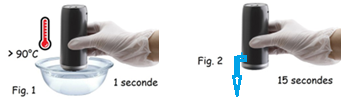
By following these steps, you will guarantee optimal operation of your pump while extending its lifespan.
🔸 Cleaning your VITALID stainless steel pan – 316 L stainless steel
Your VITALID frying pan is made of 316L surgical stainless steel, a high-quality alloy enriched with molybdenum, known for its superior resistance to corrosion, food acids, salt, oxidation and wear.
Cleaning and care tips for your VITALID equipment:
- Wash with hot soapy water, with a soft sponge or a non-abrasive cloth.
- In case of cooking residue, pour a little hot water or white vinegar onto the hot surface to deglaze naturally.
- Dishwasher-safe, but regular hand washing preserves the shine of the metal.
- Do not use metal scouring pads, steel wool or chlorinated products: they can damage the protective passive layer.
- Dry immediately to avoid limescale marks or water spots.
- Deep cleaning (residues, oxidation stains, bluish reflections)
- Soak while hot with a little baking soda or mild washing soda crystals.
⚠️ Absolutely avoid chlorinated products, bleach, abrasive powders or metal pads (steel wool), which can alter the protective passive layer of 316L stainless steel.
Technical note: At high temperature (above 250 °C), golden, bluish or brown reflections may appear. This phenomenon of surface oxidation is natural and harmless. It is neither rust nor a defect, but a surface reaction called light thermal oxidation. It happens when a pan is heated empty, with no liquid or food, or when a heat that is too strong is used.
- It can be removed with a specific stainless steel cleaner or gentle polishing if you wish to restore the original appearance. This is also why we always advise heating your stainless steel utensil over medium heat.
- FOR YOUR STAINLESS STEEL UTENSILS: VITALID sells a stainless steel restoration and preservation paste: PRPI 200, PRPI 300 and PRPI 500, particularly effective. Simply apply a small amount to a soft cloth or damp sponge. Rub the stainless steel surface in circular movements. Rinse with clean water and wipe with a dry cloth.
- 316L stainless steel fears neither acidity (tomato, lemon, vinegar…) nor heat (up to 500 °C). A yellow, brown or bluish reflection may appear over time: it is a natural oxidation with no impact on food safety. A light polishing can restore the original appearance if desired, with our stainless steel restoration paste.
Advantages of VITALID
✅ Time saving: Cooking time with VITALID is very variable depending on several factors, such as the type of food, its nature and freshness, its preparation and the type of equipment used. In general, VITALID reduces cooking time by 25 to 50% compared with traditional methods. For example, a 600-gram rib of beef needs 16 minutes in a frying pan, but only 7 to 8 minutes with VITALID. Moreover, the time spent attending is minimal, with no basting or stirring, limited to a quick check of temperature and low pressure, which makes the work much easier.
✅ Energy saving: The use of low temperatures and an airtight lid limits heat loss, allowing energy savings of 80% with induction. The thick bases of the pans store energy, making it possible to finish cooking with the heat off.
✅ More flavour: The closed environment and low temperatures preserve aromatic molecules, strengthening flavours and aromas. This gentle method keeps the crunch of food without breaking it down. Unlike steam cooking, which causes the loss of vitamins and aromas, VITALID ensures optimal and healthy cooking.
✅ Health gain: Healthy cooking must preserve vitamins and essential nutrients. VITALID brings together the ideal conditions for this: very low temperatures, short cooking times, limited oxidation with no air. Moreover, the use of low temperatures requires no recourse to often hazardous coatings (BPA or PFAS).
✅ Volume gain: The base pan is the only limiting element as regards volume. Unlike vacuum bags or multi-cookers, VITALID adapts to almost all pan diameters, progressively from 18 cm to 32 cm, according to demand, and suits various types of round pans such as stockpots, frying pans and sauté pans.
✅ Versatile use: VITALID can serve as an ordinary lid, reducing splashes and loss of flavours, while saving 20-25% of energy.
✅ No consumables: No plastic bag is needed, avoiding criticism on health and cost grounds.
✅ Increased safety: Eliminates the risks of charring, sticking, drying out, overcooking and loss of values and flavours.
✅ Culinary flexibility: Suits all recipes and types of materials, with or without fat, without harmful coatings.
✅ Odour-free atmosphere: Reduces kitchen smells, removing the need for an extractor hood and providing a very pleasant sound environment.
✅ Ease of use: Practical, with the lid able to be opened at any time during cooking to add herbs or wines.
✅ Full visibility: The transparent lid lets you easily monitor cooking.
✅ Ideal for reheating: Perfect for reheating, defrosting and vacuum storage.
✅ Advantageous in professional settings: Allows cooking to be done quickly and contributes to the trend of "fresh & homemade" dishes.
✅ Airtightness: Prevents odours and splashes without an additional filter.
✅ A complement to the barbecue: Ideal for cooking large cuts of meat in depth, without drying out, much faster than in the oven.
✅ Improved health: Preserves all vitamins and nutrients, improves health balance and simplifies culinary constraints.
Important precautions for use
⚠️ WARNING – Risk of thermal shock
Tempered glass withstands heat but remains sensitive to sudden temperature changes. To avoid any risk of shattering, never place a still-hot lid in a cold or wet sink, or on a cold surface. Also avoid exposing it to a cold draught, especially near an open window. Always let the lid cool down gradually and naturally.
⚠️ Filling: Never fill your pan beyond 4/5 of its capacity and ideally leave a small space between the food and the thermostat probe.
⚠️ Expanding foods: For foods that swell (rice, dehydrated vegetables), do not fill more than 2/3 of the pot.
⚠️ Using the pump: Do not stop the pump manually; it stops automatically. Avoid repeating the operation, as this can damage the pump. Do not put it under water, in the oven or in the dishwasher.
⚠️ Safety: Keep VITALID out of the reach of children and do not use the pump on the body or for other purposes.
⚠️ Safety standards: The appliance complies with food-contact standards (LFGB) and is guaranteed free of BPA and PFAS.
⚠️ Instructions: Read all the instructions and supervise the appliance near children.
⚠️ Prohibitions: Do not place the lid in an oven above 90°C or in a microwave.
⚠️ Handling hot surfaces: Do not touch hot surfaces without precautions; use the handles or gloves.
⚠️ Intended use: Use the lid only for its intended use.
⚠️ Heat sources: Use compatible heat sources (except microwaves); induction is the best suited.
⚠️ Original parts: Use only original parts suited to your model.
⚠️ Sensitive liquids: For recipes containing liquids such as milk, never exceed 60°C.
⚠️ Recipes with alcohol: Keep an eye on the appliance during alcohol-based recipes.
Problems & solutions
No low pressure:
- Check that there are no impurities between the pan and the lid.
- Make sure the VITALID silicone is not damaged.
- Check the cleanliness of the rim of your pan and of your lid.
- Check the condition of the surface of VITALID's lower peripheral seal.
- Make sure there is no pouring spout or handles on your pan that could hinder the placement of the lid.
- Check the cleanliness and position of the thermometer and the valves.
- Centre VITALID properly and press lightly on the handle to help start the low pressure.
- Check that the pump is well in contact with its base.
The low pressure does not hold:
- Check the cleanliness of the rim of your pan and of your lid.
- The temperature may be too high, causing steam production.
- Check that the safety valves are not clogged.
The pump does not work:
- Check that it is properly charged (light indication: red = not charged, blue = charged).
Check the thermometer:
- Test it with boiling water; it should show about 100°C.
If you encounter other problems, contact your seller's customer service, the website www.vitalid.fr. Avoid dismantling or repairing the appliance yourself, as this could void the warranty. Beware of burns: the bottom of the pan can be very hot.
Pump parameters
Warranty
VITALID is guaranteed for 2 years for domestic use. For professional use, the warranty is 6 months. This warranty covers hidden defects, but not uses that do not comply with these instructions. It may apply on mandatory presentation of the dated purchase invoice and a clear photo of both sides of your VITALID. The manufacturer is not responsible for problems caused by misuse.
🔸 Warranty handling procedure
In case of a problem, the customer must:
- Contact VITALID at [email protected]
- Provide: name, order number, purchase date, description of the problem, photos or videos if possible
- After receiving your request, our technical team will analyse your file. If the defect falls within the warranty, we will confirm that it is covered, and the return of the product will then be organised at our expense, in accordance with the law.
You will receive a prepaid return label with the necessary logistics instructions. - Wait for the analysis of the file and the possible approval of the claim.
🚚 Handling and return
If the failure is covered by the warranty:
- Return transport is paid by VITALID (prepaid label or suitable logistics solution)
- The cost of re-shipping after repair or replacement is also borne by VITALID
⚠️ Disposing of the appliance:
In accordance with European Directive 2012/19/EU on waste electrical and electronic equipment (WEEE), used appliances must not be thrown away with municipal waste. They must be collected separately to optimise recycling. The packaging is environmentally friendly and must be disposed of in accordance with the regulations in force. This appliance complies with the standards relating to electromagnetic fields and food contact, guaranteeing that it is free of endocrine disruptors.
We wish you an excellent experience using your VITALID!

www.vitalid.fr
SAS C & C INNOV- VITALID
59 B Av. du 11 Novembre
Bât 13 Quartier Richard
Tel: +33 (0)6 86 09 26 46
VITALID Premium 26 Kit
Use
The VITALID kit makes healthy cooking simple, accessible and repeatable, even for beginners, thanks to low-pressure cooking at very low temperature, gentle, fast and consistent, with no plastic bag.
How to use
- First, place the food, with or without fat, preferably at room temperature, in the cold VITALID pan, without preheating.
- Then, place the tempered glass lid with its Platinum silicone seal.
- Next, fit the automatic pump on the lid: it automatically creates the low pressure.
- Finally, switch on gently, very gently… and that's it.
Cooking takes very little water and very little energy, without the plastic bags used in some low-temperature cooking; the lid can also be opened at will to control it.
One pan, two ways to cook
The kit rules out no traditional use: without the special lid, the pan does everything a traditional pan does, with far more capacity and confidence; with the lid and the pump, it also allows VITALID cooking. In VITALID mode, the cold start, the gradual rise and the control of temperature reduce the need to turn or stir the food; a quick sear can be done at the end of cooking depending on the recipe.
Cold start and non-stick performance through the method
The cold start thus avoids excessive preheating and removes the water-drop test. Non-stick performance does not rely on an added layer, a micro-textured or embossed surface, but on the method: low temperature, low pressure, gradual rise and control of heat, with no coating likely to wear off, flake or release particles.
Compatible with all hobs
Induction, gas, ceramic glass, electric plates, barbecue, very low power, and even cooking possible with 3 tealight candles, taking advantage of the thermal stability of solid stainless steel and the encapsulated base.
Very low-temperature cooking
A gentle low pressure allows very fast cooking at very low temperature, up to 65 °C maximum: there is therefore less thermal aggression, vitamins, essential nutrients, flavors, colors and textures are preserved, and water and energy consumption drops sharply (up to 80%).
Benefits in the kitchen
VITALID lets you:
- rediscover the authentic taste of food;
- preserve its organoleptic and nutritional qualities;
- cook without plastic bags;
- preserve flavors, colors and textures;
- cook at low temperature with less energy;
- obtain more tender, more digestible dishes, for healthier and more responsible cooking.
Also added are the preservation of vitamins and minerals, collagen optimization for maximum tenderness, better digestibility, natural satiety and cooking with a low carbon footprint.
Handling
Thanks to the built-in silicone protection, the handle provides a better grip, more comfort and safety, with no extra accessory.
Care
316L stainless steel is easy to clean and withstands the dishwasher very well. Reinforced by molybdenum, its corrosion resistance does indeed allow it to better withstand repeated washing (detergents, heat, humidity), salt, food acids and cooking juices.
With no rivets, the inner surface is smooth, with no retention area or recess where residues could build up: this is therefore a major advantage for hygiene and durability. In addition, its passive layer can regenerate naturally after superficial damage, without filling in scratches.
The tempered glass and Platinum silicone lid is also easy to clean, dishwasher-safe and designed to stay unchanged over time. The welded handle and its built-in silicone protection are also dishwasher-safe.
It is best to avoid overly aggressive abrasive pads, unsuitable products and harsh chlorinated products, as well as prolonged deposits of salt.
Important: only the pump and any future electronic parts are excluded from the dishwasher, as they are not designed for it. For each accessory, you should also refer to the specific instructions in the user manuals.
Recommended care tips
- First, clean with hot soapy water after use, with a soft or non-abrasive sponge; leave to soak if residues are present.
- Also avoid overly hard abrasives on visible surfaces.
- Then put it in the dishwasher if necessary.
- Finally, dry after washing to keep the stainless steel's shine.
- The silicone protection is part of the handle: there is therefore no separate accessory to handle, wash, store or lose.
VITALID Premium 26 Pan
Use
The VITALID Premium 26 pan can be used like a classic premium stainless steel sauté pan, but it is above all designed for the VITALID low-pressure, low-temperature method.
It lets you:
- sear, brown, grill;
- simmer, sauté, stir;
- also cook large quantities;
- cook at very low temperature with the special low-pressure lid;
- also cook without a non-stick coating;
- finally, cook without plastic bags and remove any sticking, with or without fat, with the complete VITALID system.
Natural non-stick performance through the method
Under low pressure, with a cold start, with or without fat, the pan is indeed naturally non-stick, with no coating in contact with the food. It is free of PFAS, PTFE, PFOA, PFOS, PFHxS, PFNA, PFDA and other PFCA/PFSA: no coating can therefore wear off, flake or release particles into your food.
Non-stick performance relies on temperature control, the cold start and gentle low-pressure cooking, and not on a fragile layer: there is therefore no more water-drop test.
Use for VITALID cooking
Combined with the VITALID lid and its automatic pump, the pan allows low-pressure cooking at very low temperature: faster, heating very little, with less energy, and notably preserving the natural qualities of the food, whose absorbed heat load is reduced.
Cooking differently: less intensely, more gradually, with less stress and supervision, and also better preservation of taste, textures, colors and nutrients.
Use for conventional cooking
Sear, brown, simmer or sauté: the extra-wide base and the large useful surface also distribute the food better for more even cooking. The high sides are also suitable for dishes in sauce, vegetables and family meals, without excessive splashing.
Handling
Thanks to the built-in silicone protection, the handle provides a better grip, more comfort and safety. No extra accessory is therefore needed to protect your hand.
Care
316L stainless steel is easy to clean and also withstands the dishwasher very well. Its molybdenum content does indeed give it superior resistance to repeated washing, corrosion, salt, humidity, food acids, cooking juices and chlorinated, hot and humid environments.
With no inner rivets, the inside stays smooth, with no recesses where residues can build up: cleaning is therefore made easier.
It is best to avoid overly aggressive abrasive pads and unsuitable products, because they can create micro-scratches.
Warning: the fact that the pan alone is dishwasher-safe does not mean that the pump, the electronic components, the thermometer or the assembled lid are as well.
With no coating likely to wear off or flake, this pan also durably keeps the qualities of its solid metal.
An extra advantage, since this pan is designed to last a lifetime!
Care tips
- First, clean after use with hot soapy water, with a soft sponge; leave to soak if necessary.
- Then put it in the dishwasher if needed.
- Also avoid overly hard abrasives on visible surfaces.
- Finally, dry after washing to keep the stainless steel's shine.
- The silicone protection is built into the handle: there is therefore no separate accessory to handle, wash, store or lose.
VITALID Premium 26 Lid
Use
Use is deliberately simple: cold start, with no excessive preheating.
Principle
- Place the food in the cold pan.
- Place the lid, with the seal correctly positioned.
- Fit the VITALID pump and create the low pressure.
- Start heating very gradually and maintain very low-temperature cooking.
- To open, release the low pressure following the intended procedure before removing the lid.
Creating the low pressure
Connect the pump: the system automatically reaches the target low pressure, then the non-return valve maintains it between any restarts. Check that the indicator behaves normally and start heating gradually.
Opening
Never force the lid while low pressure is present: stop heating if necessary, gradually return the chamber to atmospheric pressure with the intended device, wait until the lid is free, then lift it normally. This procedure directly contributes to the safety of the system.
Temperature monitoring
Follow the built-in indicator: a gentle, gradual rise, with no unnecessary overshoot. The transparency lets you observe without breaking the low pressure, letting air in or losing heat.
An essential role in VITALID non-stick performance
VITALID uses neither a non-stick coating nor micro-texture. Non-stick performance relies above all on:
cold start + gradual rise + very low temperature + controlled low pressure.
The lid maintains the environment needed for this cooking.
Care
Tempered glass and silicone seal: simple care, dishwasher-safe.
After use
- let everything return to normal temperature before any significant handling;
- clean with hot soapy water and a soft sponge, including around the valves and technical passages;
- check that the seal is clean;
- rinse, then dry before storing.
To avoid
- knocks on the edges of the glass and metal objects that could scratch or chip it;
- harsh abrasives and significant thermal shocks;
- using a lid with a crack, a chip or an impact mark;
- any blockage of the safety elements.
The seal must remain:
clean, supple, correctly positioned and free of cuts or significant deformation.
Check regularly:
- the cleanliness of the safety valve and the free movement of the non-return valve;
- the absence of food residue in the air passages;
- the good condition of the seals around the through elements;
- the proper operation of the indicator or thermometer;
- the absence of cracks or impact marks around the drilled holes.
No technical opening must remain blocked by grease, deposits or dried residue.
VITALID Automatic Pump
Use
Use is deliberately simple.
Getting started
- Place the food in the cold pan.
- Position the VITALID lid and check that the seal is clean and properly fitted.
- Place the pump in its position and switch it on: it automatically creates the low pressure and stops at the programmed value.
- Remove the pump from the lid.
- Start heating very gradually.
During cooking
No constant action is needed. If the seal were to be lost, restart the pump until the target value is regained.
Opening the lid
The pump must not be used to pull off or force the lid. Before opening: stop heating if necessary, use the intended valve to restore atmospheric pressure, wait until the lid is completely free, then open normally.
Charging
Via USB-C. It is advisable to recharge the pump when the battery level becomes low and to avoid storing it completely discharged for a long time.
Care
The pump contains a motor, a battery and electronic components: it must never be immersed or put in the dishwasher (the pump and electronic parts are excluded).
Recommended care
- wipe the outside with a slightly damp cloth;
- clean the connection area to the lid and keep the suction ducts clean, without letting water into the openings;
- periodically check the small sealing gasket on the suction nozzle;
- never use abrasive or corrosive products;
- let it dry completely before storing or charging.
Never do
- immerse the pump;
- put it in the dishwasher;
- place it under a tap;
- remove the battery or electronics without authorization;
- block the air inlets or outlets.