A flavourful adventure full of vitality!
For a long time, scientists, doctors and the media have warned about the effects of overly aggressive cooking. Under the action of heat, vitamins, texture, juiciness, flavour compounds and other essential nutrients in food can be deeply altered, destroyed, or turned into toxic or even carcinogenic substances. Studies show in particular that this varies greatly depending on the cooking method, and is often irreversible.

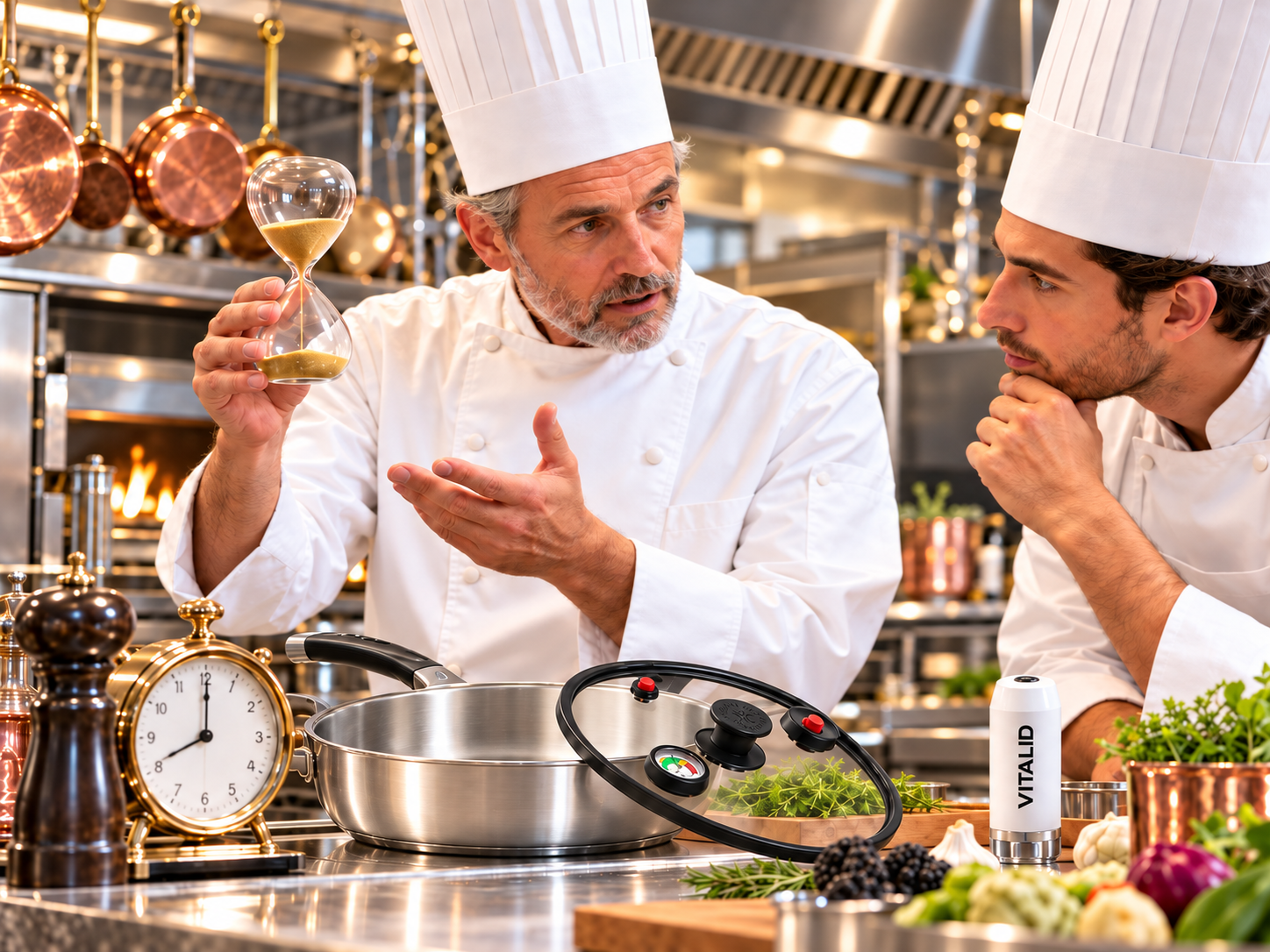
People talk a lot about lowering the temperature, but far less about controlling the cooking time. Yet the two cannot be separated. Even at low temperature, cooking for longer keeps transforming the food. Studies carried out at low temperature on various meats show, among other things, that juiciness decreases as heating time increases.
Taste itself depends on the combination of time and temperature. Research on beef shows that different combinations of temperatures and durations change the non-volatile compounds associated with taste characteristics.
The conclusion is, in the end, very simple: even when only lightly exposed to heat, a food heated for long enough will keep transforming, lose its juiciness, dry out and deteriorate.
That is the whole paradox: heating less traditionally means cooking for longer. And to go faster, you generally have to heat more. Either way, the food is degraded.
The VITALID project was born from this contradiction: how can you cook much faster while heating far less?
A real challenge, and the possible start of a break with centuries of cooking dominated by the same reflex: to speed up cooking, turn up the heat.
But to escape this dilemma, another parameter had to be found to act on.
The spark: acting other than through heat
After months of going round in circles around the same problem, the idea came from a simple observation: under certain conditions, water can boil at a temperature well below 100 °C.
At altitude, for example, atmospheric pressure drops and water boils sooner.
What if, instead of always raising the temperature, we acted on the pressure?
This lead immediately changed the direction of the research. Pressure was no longer just a physical quantity: it could perhaps become a genuine cooking parameter.
The idea of changing the environment in which the food cooks, by deliberately creating a controlled vacuum in a closed vessel, then became the starting point of the project.

Could pressure become a genuine cooking parameter?
It was now necessary to understand what was really happening: the behaviour of the water naturally contained in food, heat exchange, condensation, changes in texture, tenderness, juiciness, taste, cooking time, and the regulation and stability of the process.
At this stage there was no directly usable scientific answer: only an intuition. Everything remained to be proven.
2012 · 2026
Fourteen years of research
The first trials date back to 2012. They quickly proved promising enough to confirm two observations that would guide the rest of the research: remarkable tenderness and a particularly interesting expression of flavour.
That same year marks the first patent filing.
It was necessary to understand how and why it worked, how far the principle could be exploited, and above all how to make it perfectly controllable and reproducible.
The research then continued in many directions: understanding the scientific principle, exploring different applications, designing and building prototypes, comparative trials, improving shapes and volumes, searching for suitable materials, developing sealing systems, priming, regulating and maintaining the vacuum and the temperature, safety, ergonomics and ease of use.
Each trial brought its share of answers. Each failure ruled out a lead. Each improvement brought the initial intuition closer to a genuine cooking method.
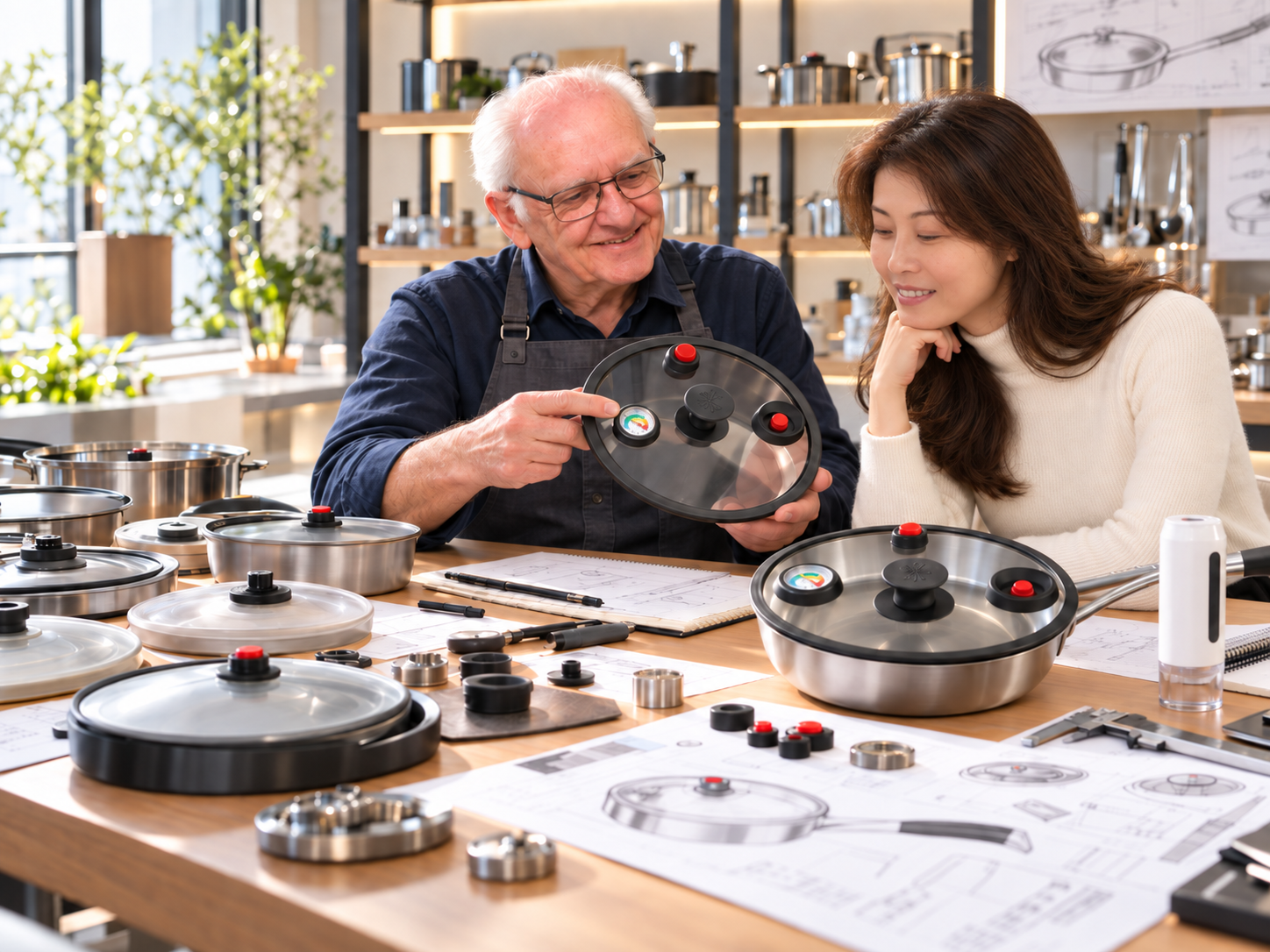
Over the years, the technology became more refined, the applications widened and further patents followed, until they formed international protection for the VITALID technology.
Fourteen years of research, testing, design and fine-tuning were therefore needed to reach a new way of cooking: acting simultaneously on temperature, time and vacuum so as to ask much less of the heat.
The scientific literature on low-temperature cooking also confirms that changes in proteins, tenderness and food quality depend heavily on the combination of time and temperature.
But our goal went well beyond cooking performance alone.
We needed to respect health more, preserve nutritional and sensory qualities as much as possible, limit drying out and nutritional waste, greatly reduce energy needs, simplify cooking and improve well-being and comfort of use, while reducing its impact on the planet.
VITALID is therefore not just a new way of cooking. It is another way of thinking about cooking: getting more from the food by imposing much less on it.
But behind this technology, it is first and foremost a human adventure.
A human adventure
Who is behind VITALID?
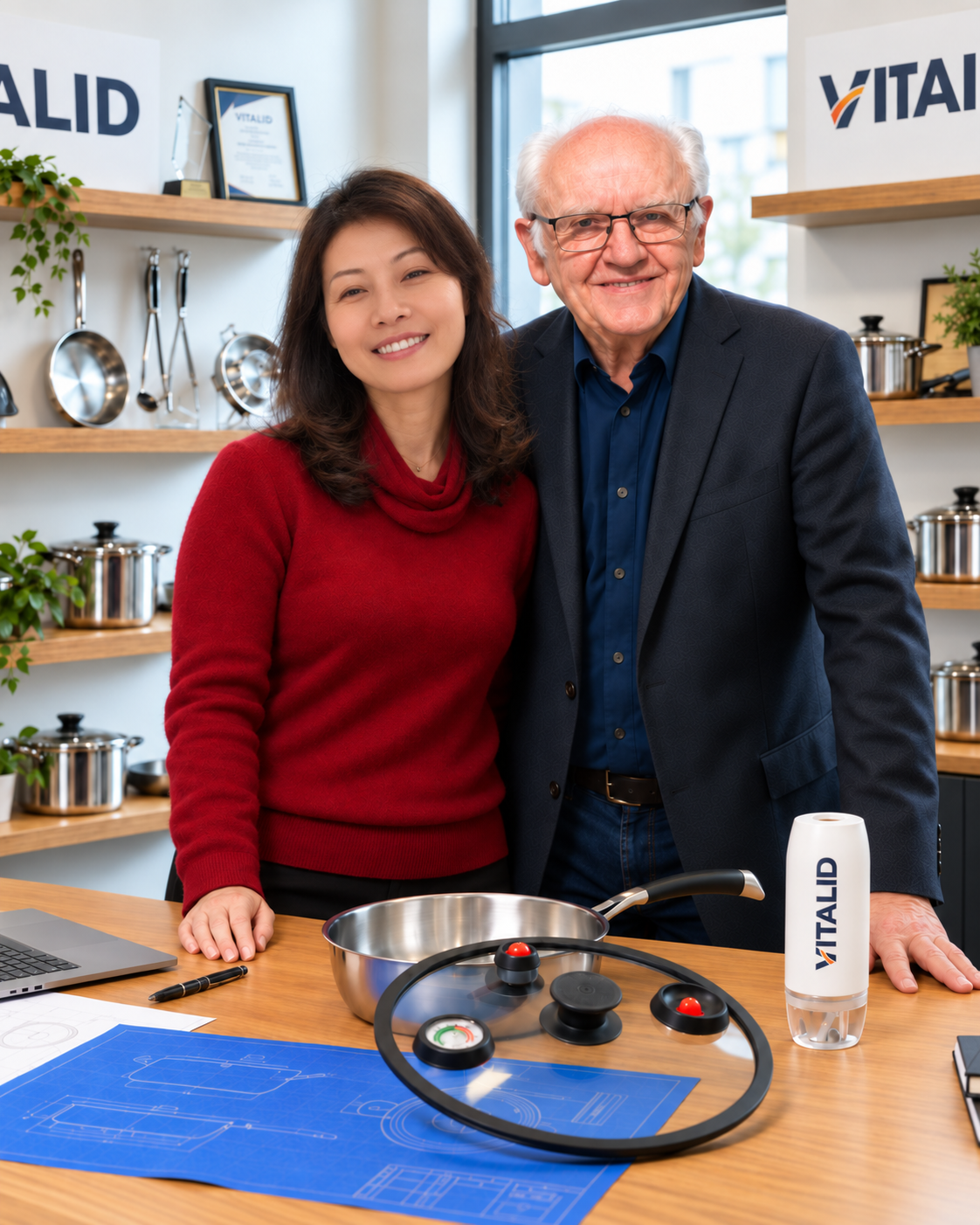
At the origin of VITALID is a Franco-Chinese couple: Lucy and Gérard, both driven by the rise of home cooking, the growing place of gastronomy in our daily lives, and also by a major concern for health and for preserving the quality of food.
With their two different culinary cultures and nearly 50 years of combined experience in the home appliance industry, they decided to tackle the paradox that cooking had always seemed to accept: to cook faster, you had to heat more; to heat less, you had to accept cooking for longer.
VITALID is not meant to dictate a new way of eating, impose a diet or rule out certain recipes. On the contrary, the ambition is to preserve cooking as we love it, from traditional recipes to modern creations, without asking anyone to change their habits.
Their ambition was never to reinvent the culinary world or turn cooking upside down, but to:
- Free cooking from some of its constraints and adapt it better to the demands of modern life.
- Rediscover the pleasure of home cooking, rediscover the authentic taste of food, keep complete freedom to cook, and show that the simplest dish can become remarkable when it is simply well cooked.
- Make this mastery accessible to as many people as possible: less stress, less uncertainty, less waste, less energy consumed and more savings every day.
This search for sobriety goes beyond the kitchen: heating much less, using less energy, limiting food and nutritional waste, avoiding unnecessary consumables and designing durable equipment also means reducing the footprint of the way we cook and respecting the planet better.
Their goal was thus to break out of the dilemma between heat and cooking time and to offer everyone a method that is fair, effective, economical, anti-waste, extraordinarily simple to reproduce and above all focused on the maximum preservation of food and of its nutritional and sensory qualities.
From the start, Lucy and Gérard's goal was never to sell one more utensil or to claim to become “the best”, but to offer a universal method, suited to most foods and designed to answer a fundamental issue that has become essential: better reconciling cooking, health, food quality and resources.
Just the two of them, facing a problem that everything seemed to make unsolvable, it took fourteen years of research, trials, failures, passion and perseverance to turn a simple intuition into a new, mastered cooking method.
Cooking and cooking well: two different things, yet complementary
This distinction is essential. Heating food is about the physical control of temperature, time and, with VITALID, vacuum. Cooking as a craft is about imagination, taste, sensitivity and know-how.
The culinary arts will remain intact: a space where everyone can express themselves and flourish. Seasoning, imagining, assembling, plating, passing on a family recipe or creating something new will always remain everyone's space of freedom.
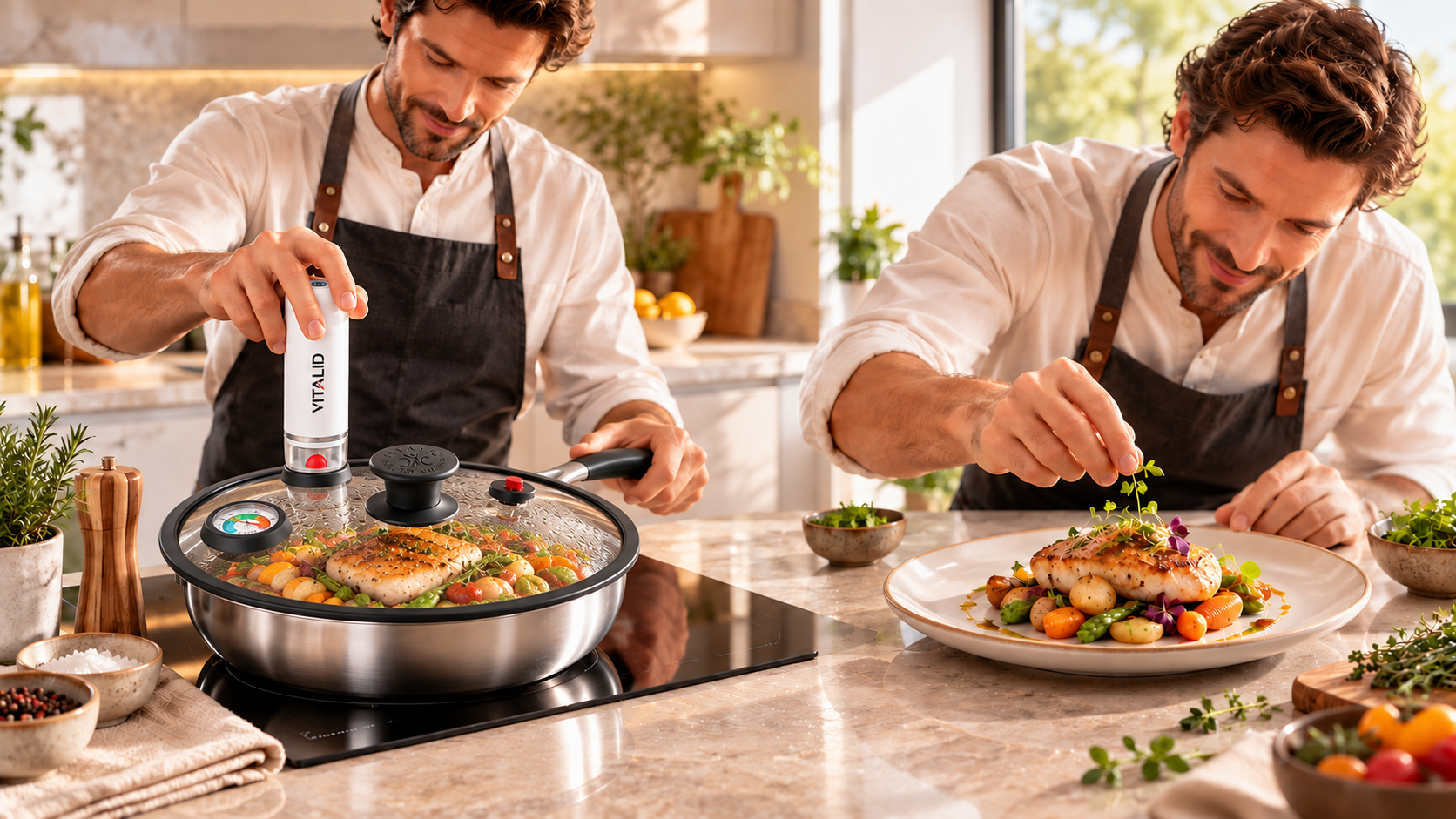
VITALID is not meant to replace the cook, but to give them more control where cooking is still too often uncertain.
Far less stress, and far less risk of overcooking, drying out or failing. More consistency, calm and control, without taking anything away from creativity.
Whether it is domestic, collective or professional, cooking can thus become more scientific in its control while remaining deeply human in its expression.
VITALID masters the cooking. It is up to each person to keep on cooking.
Explaining rather than promising
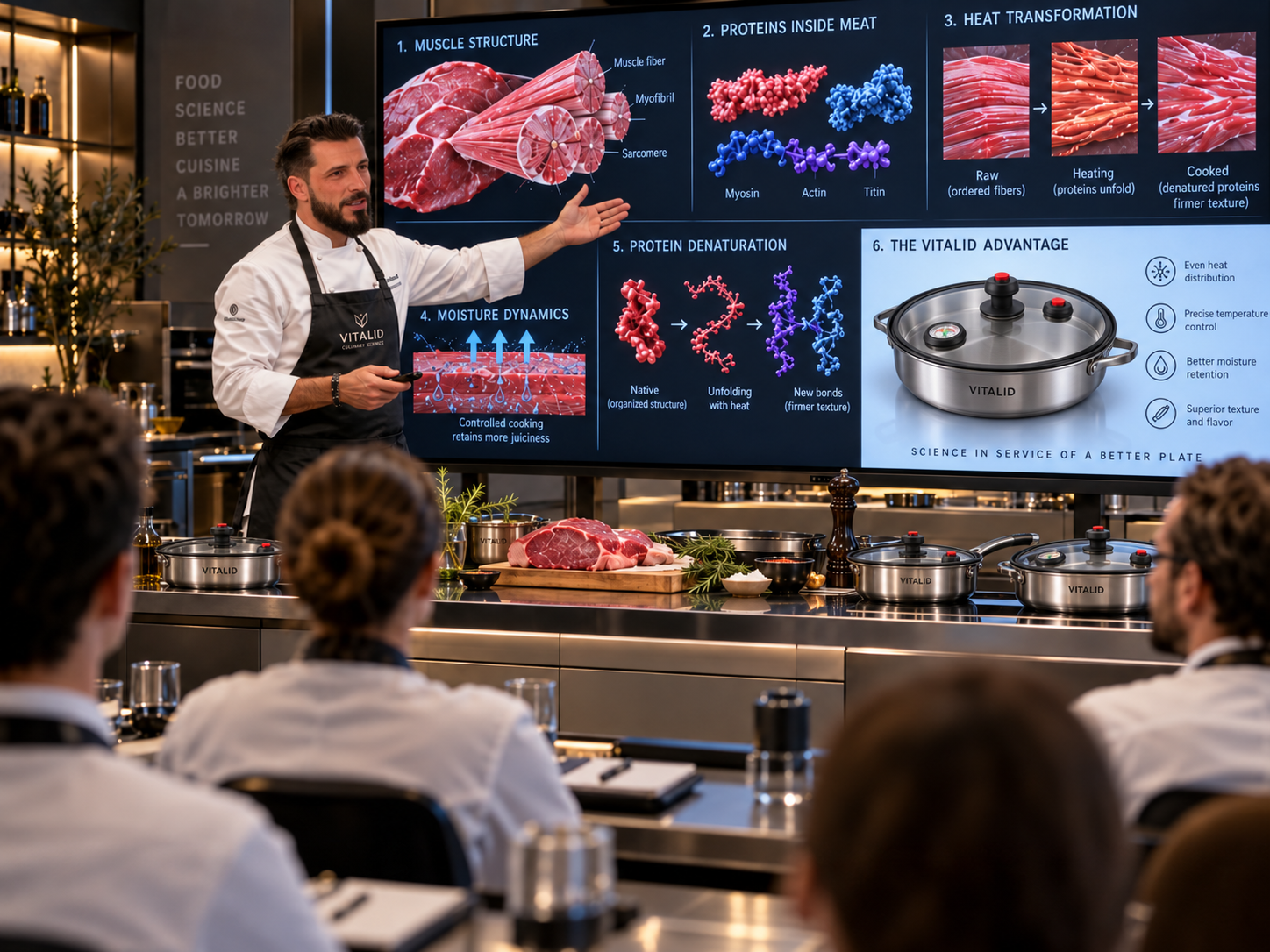
From the start, one rule imposed itself: do not ask the consumer to take our word for it.
Each principle had to be explainable in simple terms, related to known physical phenomena and tested against the available scientific data. Understanding what happens inside the food, explaining why temperature matters, why time matters, and why the cold start, water, pressure or condensation come into play.
That is also what VITALID stands for:
- Understand before believing.
- Measure before claiming.
- Explain before selling.
This requirement has accompanied the project since its origin.
From prototype to everyday life
From invention to everyday cooking
Creating a new technology was not enough. It also had to leave the prototype stage to become simple, reliable, durable and accessible, and then find its natural place in an ordinary kitchen without asking everyone to learn to cook all over again.
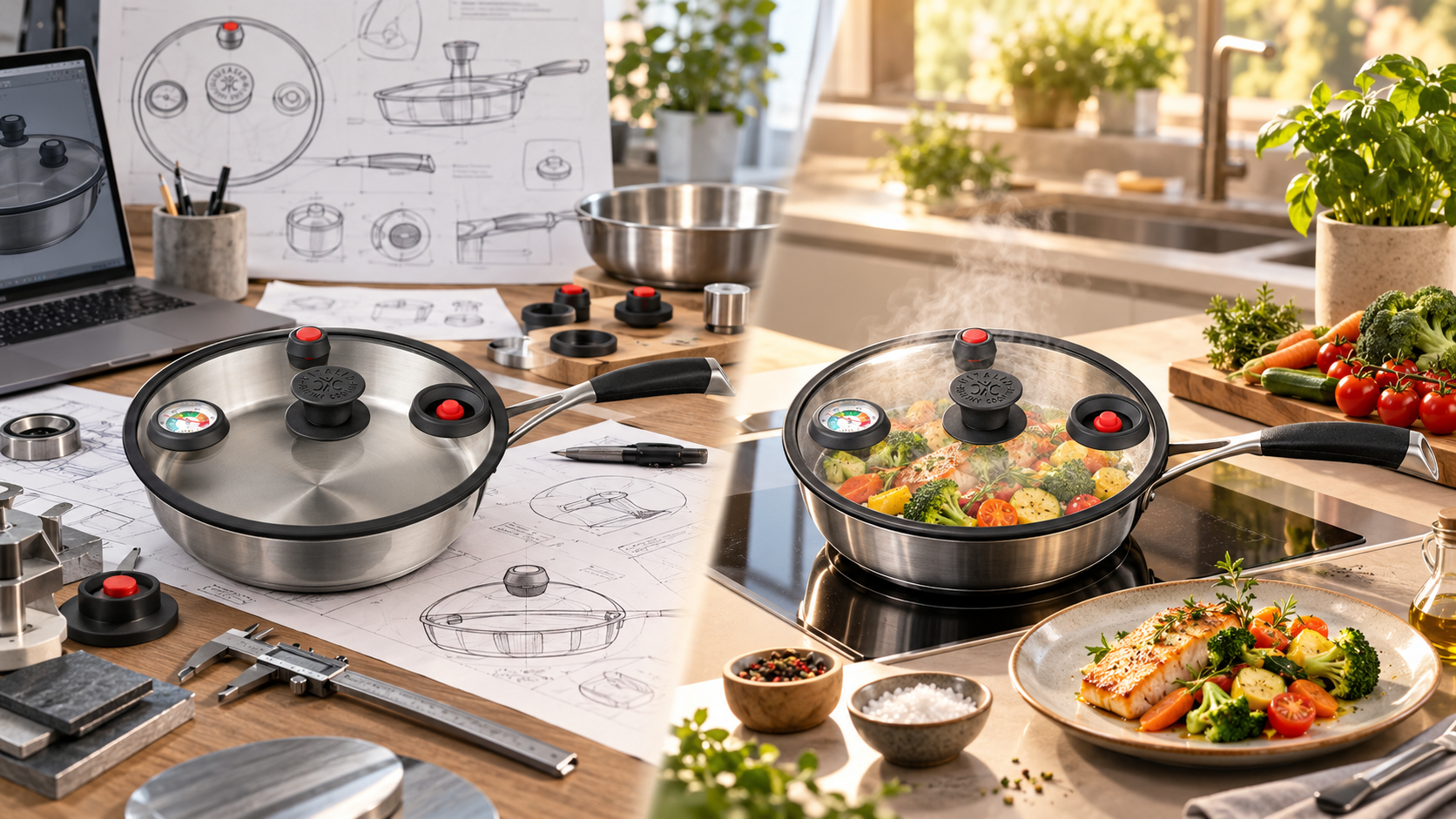
That is precisely what guided the development of VITALID: bringing a new cooking method into everyday routines.
The technology had to serve the person simply preparing the family dinner just as well as the demanding enthusiast or the professional looking for consistency, quality and reproducibility.
VITALID was not born to add one more pan to the market. It was born to offer a different answer to a problem that traditional cooking seemed to have accepted as inevitable.
No more having to choose between cooler and faster, but doing both at once.
Spreading the word
Explaining, showing, spreading the word
This desire to explain will not stop at the website.
Around VITALID.fr, we want to build a genuine network of information, demonstration and recommendation. Our two Creator Partners, Orlane and Dimitri, will support this effort on social media such as Instagram, Facebook and YouTube, with demonstrations, trials, comparisons, usage tips and feedback.
But VITALID will not rely on online sales alone. The method will also be presented and distributed by specialised Partner Shops, ready to promote it and let you benefit from this new approach to cooking.
Alongside them, a whole network of ambassadors will be able to contribute to its growth through word of mouth and the recommendation of food professionals who want to support their customers right down to their plate: butchers, fishmongers, market gardeners, organic shops, producers, as well as cooking schools, naturopaths, wellness shops, delicatessens and any other trades close to their customers.
Everyone has a role to play: making the method known, explaining it simply and allowing a domestic and professional audience to discover it in places where trust already exists.
Because a new way of cooking is not spread by advertising alone. It is also passed on through experience, demonstration and recommendation.
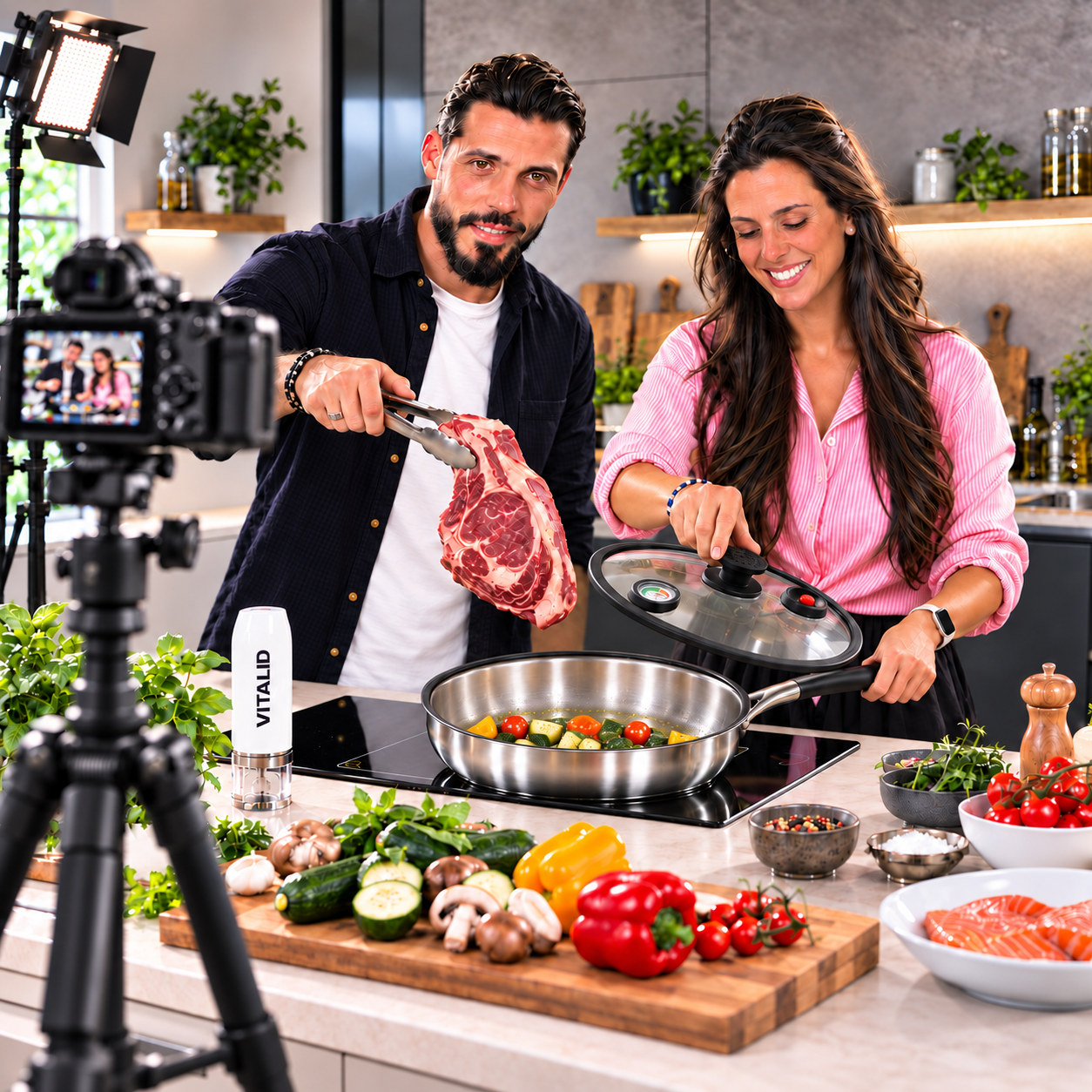
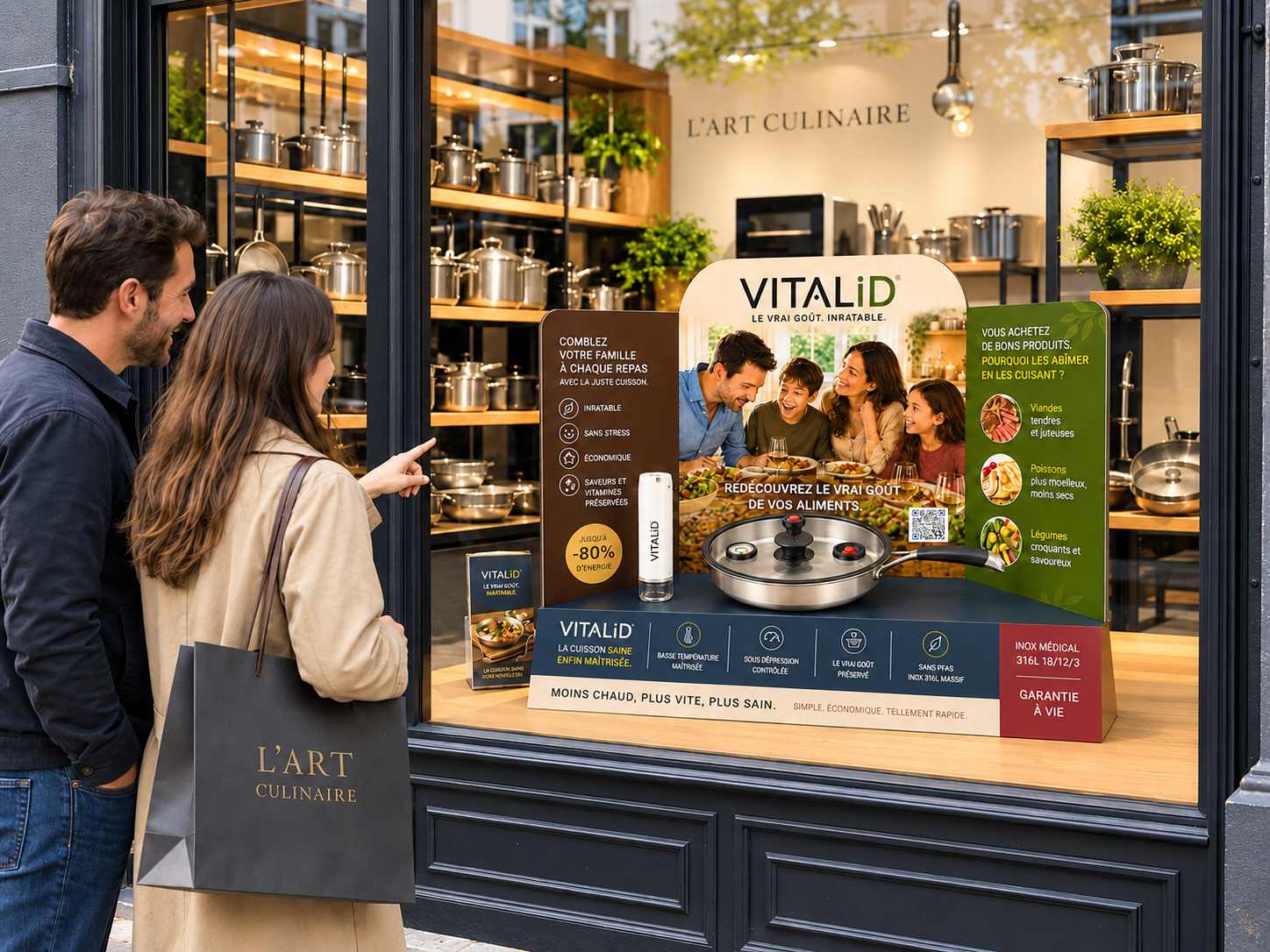
Our partners will be able to introduce the method in places where trust already exists: specialist shops, food retailers and cooking schools.
They will allow a domestic and professional audience to concretely discover this other approach to cooking.
What comes next
And this is only the beginning
The first VITALID pan is not an end in itself. It is the first visible result of a technology, already very effective, that is set to evolve further.
Different utensils, different diameters and different volumes will gradually broaden the uses of the method to meet the needs of a household as well as those of a collective or professional kitchen.
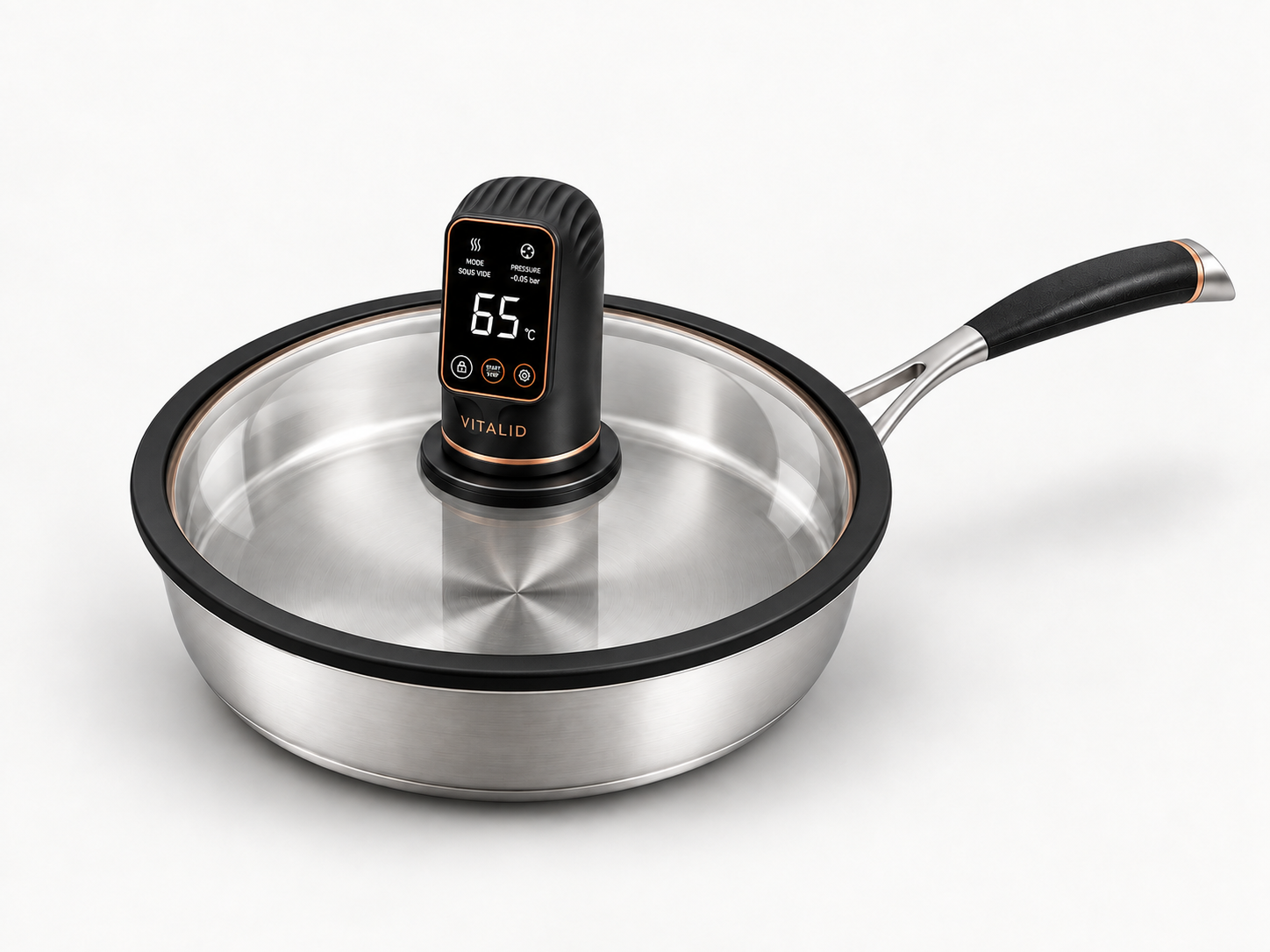
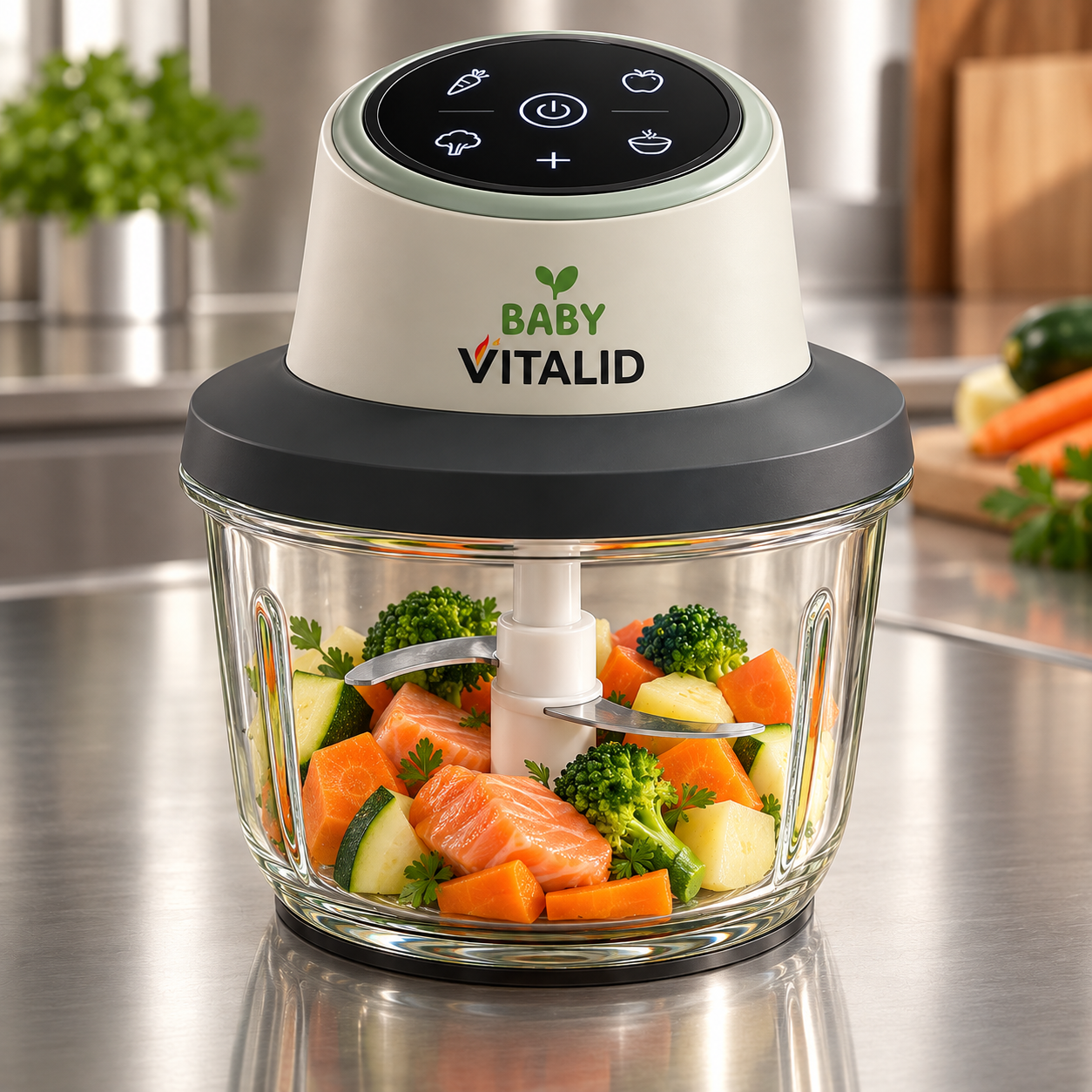
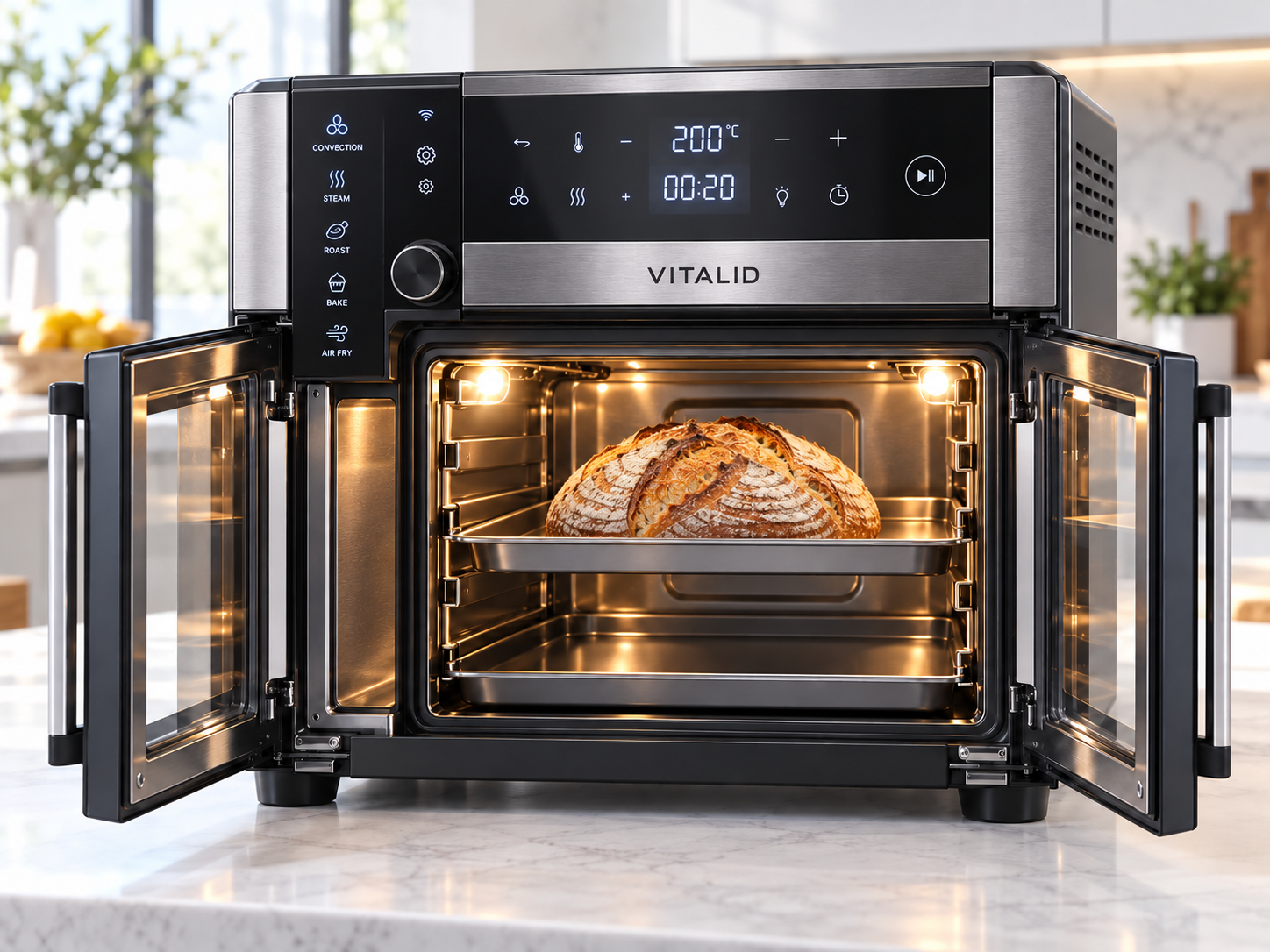
The technology may also take other forms: automatic and programmable appliances, professional drawer cooking systems, equipment able to manage temperature, time and vacuum on its own, making the method even simpler, more precise and more reproducible.
The goal remains the same: keep the principle, automate its use further and adapt it to every need.
Today VITALID is a method, a technology and a first range of equipment.
Tomorrow, it could be a genuine family of cooking solutions.
VITALID does not end with its first lid: its story is only just beginning.